Pergola Permits, HOA Approvals, and the Paperwork Nobody Warns You About
The excitement lasted exactly four days. On Monday, the homeowner signed the pergola contract, chose the aluminum finish that matched the house trim, and spent the evening showing the 3D rendering to anyone who would look at the phone screen. By Thursday, the contractor called with news that landed like a bucket of cold water: before a single post could be set, the project required a building permit from the county, a sealed engineering drawing from a licensed structural engineer, a site plan showing the structure's position relative to property lines and setbacks, and, because the home sat within a homeowners association, an architectural review board submission with elevations, material specifications, and a color sample. The pergola that was supposed to be "up in two weeks" was now a paperwork project with a timeline measured in months.
This story repeats itself thousands of times every spring across Florida, and the frustration it generates is entirely preventable. The pergola permit requirements Florida homeowners encounter are not arbitrary bureaucracy. They exist because Florida's building codes are among the most stringent in the nation, engineered to ensure that every permanent outdoor structure can withstand the wind loads, the rain loads, and the environmental conditions that the state's geography guarantees. Understanding the process before you begin, rather than discovering it after you have signed, transforms permits from a project-killing surprise into a manageable administrative step.
[Explore Go-Fenetex Residential Solutions → https://gofenetex.com/residential]
Florida Permitting Demystified
In Florida, any permanent structure attached to the home or anchored to the ground requires a building permit from the local jurisdiction. This includes pergolas, screen enclosures, patio covers, and, in most cases, freestanding structures that exceed a minimum size threshold (typically 120 square feet, though the threshold varies by county). The permit process confirms that the structure meets the Florida Building Code requirements for wind resistance, structural integrity, and setback compliance.
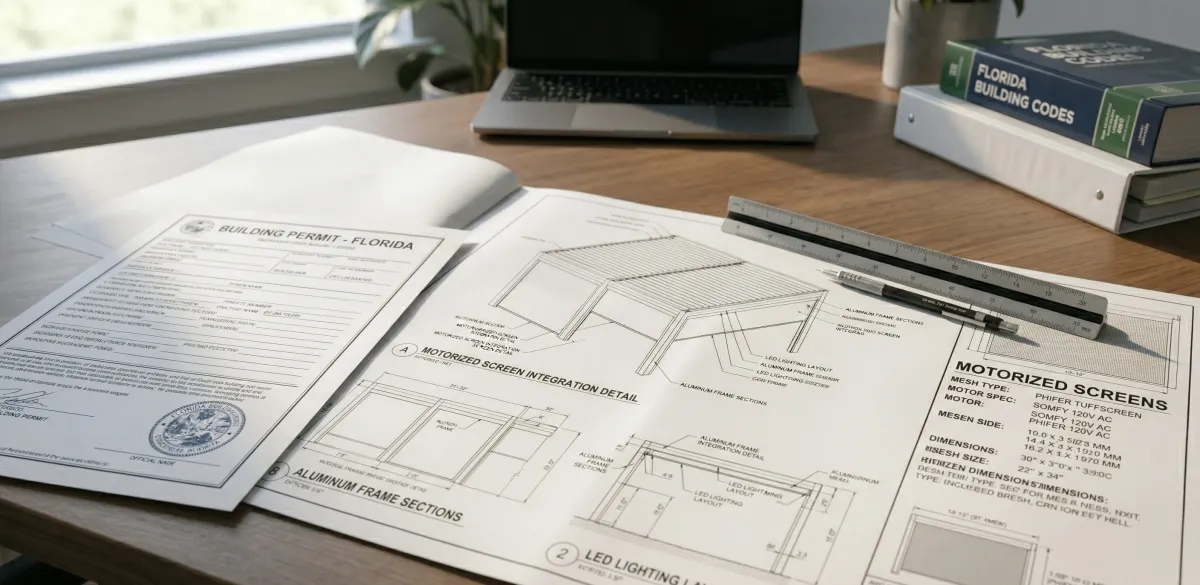
The permit application typically requires three documents: a site plan showing the structure's location on the property relative to lot lines, easements, and the existing home footprint; a sealed structural engineering drawing that demonstrates the structure's ability to withstand the wind loads specified for your county and exposure category; and a product approval or manufacturer specification sheet for the materials being used.
Permit costs range from $200 to $1,500 depending on the jurisdiction and the project's scope. Processing times range from two weeks in efficient jurisdictions to eight weeks or more in high-volume counties. The permit must be obtained before construction begins, not during or after. Building without a permit in Florida carries consequences that extend beyond fines: unpermitted structures can be ordered removed, they may not be covered by homeowner's insurance, they can complicate title transfers when the property is sold, and they can void the warranty on any products installed on or within the structure.
[See Why Homeowners Choose Go-Fenetex → https://gofenetex.com/why-go-fenetex]
HOA Approval: The Parallel Process
For homeowners within a homeowners association, the HOA architectural review process runs parallel to, and is independent of, the county permitting process. Passing one does not guarantee passing the other. Both must be satisfied before construction begins.
HOA submissions typically require architectural elevations showing the structure's appearance from multiple angles, material and color specifications, a site plan showing the structure's position on the lot, and a written description of the project scope. Review timelines vary from two weeks to sixty days depending on the association's meeting schedule and review backlog.
The most common reasons for HOA rejection are color or material choices that conflict with community design standards, structures that exceed height limitations specified in the covenants, structures positioned too close to property lines or within easements, and designs that the review board considers inconsistent with the neighborhood's architectural character. The best strategy for avoiding rejection is to obtain the community's architectural guidelines before finalizing the pergola design, align material and color selections with approved palettes, and submit a professional-quality rendering that demonstrates how the structure complements rather than conflicts with the home and the neighborhood.
For homeowners planning to add Go-Fenetex retractable motorized screens to the pergola, the HOA submission should include the screen system as part of the initial proposal. Some associations have separate requirements for screen enclosures, and submitting the pergola and screens as a unified project prevents the need for a second review cycle.
[Find a Go-Fenetex Dealer Near You → https://gofenetex.com/dealership]
Wind Load Engineering and Product Certification
Florida's building code requires that outdoor structures be engineered to withstand specific wind speeds based on two variables: the property's geographic location within the state and its exposure category, which accounts for terrain and surrounding structures. Coastal properties in high-velocity hurricane zones (HVHZ), specifically Miami-Dade and Broward counties, face the most demanding requirements, with design wind speeds that can exceed 180 mph. Inland properties have lower requirements but are still significantly more stringent than building codes in most other states.
The sealed engineering drawing that the permit process requires is a document prepared by a Florida-licensed professional engineer (PE) that certifies the pergola's structural adequacy for the specified wind loads. This document calculates the forces that wind exerts on the structure, including uplift, lateral pressure, and overturning moment, and demonstrates that the columns, beams, connections, and footings are sized to resist those forces with a safety factor specified by the code.
For homeowners adding Go-Fenetex motorized screens to the pergola, the engineering package should account for the additional wind load created by the deployed screen fabric. A deployed screen creates a sail area that increases the wind force on the structure beyond what the open pergola frame alone would experience. Quality screen manufacturers, including Go-Fenetex, provide engineering data for their products, including wind load ratings verified through ASTM E1886/E1996 testing, that the structural engineer incorporates into the pergola's engineering calculations.
This integration of structure and screen engineering is one of the primary reasons professional outdoor living providers are preferable to general contractors for pergola and screen projects. The professional provider designs the pergola and the screen system as a unified engineering package, ensuring that the structure is sized for the complete system rather than engineered for the pergola alone and then modified, sometimes inadequately, to accommodate screens after the fact.
[Explore Commercial Solutions by Go-Fenetex → https://gofenetex.com/commercial]
The Professional Advantage
The permitting process is manageable, but it is not simple. For homeowners who have not navigated Florida's building department processes before, the learning curve is steep and the consequences of errors, incomplete submissions, or incorrect engineering are measured in weeks of delay and hundreds of dollars in resubmission fees.
Reputable pergola and outdoor living providers handle the entire permitting process as part of their project scope. They maintain relationships with structural engineers who specialize in outdoor structures. They prepare the site plans, the engineering packages, and the permit applications. They manage the HOA submission process for homeowners within governed communities. And they schedule the required inspections during and after construction, ensuring that the final structure receives a certificate of completion that protects the homeowner's insurance coverage, property value, and legal standing.
For projects that include Go-Fenetex motorized screens, the professional provider integrates the screen engineering into the structural package, runs the electrical conduit during pergola construction rather than retrofitting it afterward, and coordinates the screen installation timing with the pergola completion so that the system is operational as quickly as possible after the structure passes its final inspection.
[See Go-Fenetex Home Page → https://gofenetex.com/home-page]
Clearing the Path to Your Outdoor Room
The permit process is not the enemy of your outdoor room. It is the verification that your outdoor room is built to last. The paperwork feels tedious in the moment, but the alternative, a structure that lacks engineering certification, insurance protection, and legal standing, is a liability that compounds over every year of ownership.
Here is a homeowner's checklist for navigating the process efficiently. First: choose your provider before you choose your design. A provider experienced in Florida permitting will design the structure within code requirements from the start. Second: request the HOA architectural guidelines before finalizing the design. Alignment up front prevents rejection and redesign. Third: confirm that the engineering package includes the screen system loads if you plan to add Go-Fenetex retractable screens. Fourth: budget four to eight weeks for the permitting timeline and factor that into your seasonal planning.
The structure is approved. The engineering is certified. The footings are poured and the columns are rising. But before we celebrate the pergola's completion, there is one more conversation to have, the one that every pergola owner has with themselves about six weeks after the structure is finished: the conversation about what the pergola cannot do alone. That is the subject of our next article, and it is the pivot point of this entire series.
Start exploring the complete outdoor living ecosystem at NextGen Screens
Discover Onetrack's motorized screen systems at Onetrack Screens
Learn about hurricane-rated protection with Maxforce Screens
